Turkish officials: Europe wanted to export extremists to Syria Officials point to Europeans arriving in Turkey with weapons and on watchlisted passports and say warnings were ignored
Turkish officials have accused European governments of attempting to export their Islamic extremist problem to Syria,
saying the EU has failed to secure its own borders or abide by pledges
to share intelligence and cooperate in fighting the jihadist threat.
The failures were outlined by Turkish officials to the Guardian
through several documented instances of foreign fighters leaving Europe
while travelling on passports registered on Interpol watchlists,
arriving from European airports with luggage containing weapons and
ammunition, and being freed after being deported from Turkey despite
warnings that they have links to foreign fighter networks.
“We were suspicious that the reason they want these people to come is
because they don’t want them in their own countries,” a senior Turkish
security official told the Guardian. “I think they were so lazy and so
unprepared and they kept postponing looking into this until it became
chronic.”
The conversations with Turkish officials took place before the latest
Isis-claimed terror attacks in Brussels, but those bombings and the
attacks in Paris last November brought into stark relief Europe’s
failings in tackling the threat from Europeans intent on travelling to
Syria or Iraq to fight with Isis and then returned to carry out
atrocities at home.
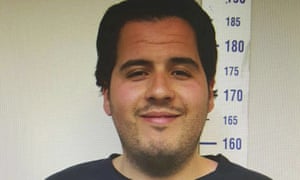
On Wednesday the Turkish president, Recep Tayyip Erdoğan, said Ibrahim el-Bakraoui, one of the bombers at Brussels Zaventem airport, had been detained in Gaziantep in June of last year
over suspicions that he intended to travel to Syria as a foreign
fighter. Though Belgian authorities were informed of his arrest, they
told Turkey that they had no evidence that he had terrorism links and
did not request his extradition. He was deported to the Netherlands
before returning to Belgium.
Ankara had also warned French authorities about Omar Ismail
Mostefai, whose name turned up in an investigation of a cell of French
nationals suspected of terrorism links that ran from late 2014 to the
summer of 2015, according to a senior Turkish official. Mostefai was one
of the Isis militants who stormed the Bataclan concert hall in November
last year.
European officials and the US-led coalition have repeatedly said
Turkey ought to do more to secure its borders. Critics of Erdoğan accuse
Ankara of turning a blind eye to the influx of foreign fighters, saying
Turkey hoped to undermine the embattled Syrian strongman Bashar
al-Assad. They point to the lack of hindrance encountered by Middle
Eastern jihadis travelling through Turkey to Syria, who were prevalent along the established routes and made little effort at discretion on the way to the frontlines.
Advertisement
They
also point to the fact that most of the thousands of foreign fighters
battling in Syria today entered through Turkey. Vladimir Putin, after a
Russian plane was shot down for straying briefly into Turkish airspace,
accused Ankara of being “accomplices of terrorists”.
“The threat is unprecedented and intelligence and domestic law
enforcement agencies appear to be overwhelmed by the numbers involved,”
said Aaron Stein, a resident senior fellow at the Atlantic Council and
author of a book on Turkish foreign policy. “In many ways, this explains
their anger with Turkey. There is an expectation on the EU side that
Turkey would put in place secondary measures to stop cross-border
movement of people and material to Islamic State.
“Turkey has dramatically increased border security, beginning in
March 2015,” he added. “However, before March 2015, there were
legitimate concerns about the permissive environment along most of the
Turkish-Syrian border.”
In interviews with the Guardian, Turkish officials challenged the
assessment that they did not do enough to combat the terror threat, and
provided details of several incidents they say show European governments
allowed people to travel to Turkey.
In June 2014, Turkish security officers at Istanbul airport
interviewed a Norwegian man who openly told them that he had come to
Turkey in order to travel to Syria for “jihad”. Isis had just surged
through Iraq, conquering the plains of Nineveh, and would soon announce a
caliphate on its territories in Syria and Iraq, upending fragile nation
states that had already begun to collapse.
When they searched his luggage, they found that he had managed to
travel out of Oslo with a suitcase that contained a camouflage outfit, a
first aid kit, knives, a gun magazine and parts of an AK-47, the
contents of which had managed to elude customs authorities in Europe.
Advertisement
Two
months later, a German man arrived in Istanbul with a suitcase
containing a bulletproof vest, military camouflage and binoculars that
he managed to carry through an airport in Paris on his way to Turkey.
In 2013, A Danish-Turkish dual citizen, Fatih Khan, left Denmark for
Syria, but was detained while trying to cross the border in the Turkish
province of Kilis and deported back to Copenhagen. He was given another
passport by the Danish authorities, and made his way back to Syria.
That same year, Mohamed Haroon Saleem, a British citizen, arrived in
Istanbul from London and travelled to Syria, having managed to travel
out of the UK with a passport that was flagged on the Interpol list as
stolen or lost.
Mohamed Mehdi Raouafi, a French citizen, left France in January of
2014 to join the war in Syria. Despite his sister warning the Turkish
authorities who subsequently informed the French government that he was
going there to join radical groups, he was allowed to travel out of
France.
The Soufan Group, a respected security consultancy and thinktank,
estimated in late 2015 that between 27,000 and 31,000 foreign fighters
had travelled to Syria and Iraq to fight alongside militant groups,
including 760 from the UK.
Turkey now has a list of more than 38,000 individuals who are banned
from entry, based partly on more recent European cooperation and its own
investigations into individuals arriving in the country. It has
deported over 3,200.
Turkish officials said they approached European counterparts as early
as late 2012 to come up with a pooled list of names of potential
radicals who would not be allowed inside Turkey, saying they feared the
aftermath of revolutions in the Arab world would lead to a vacuum of
power that would allow the flourishing of groups such as al-Qaida inside
Syria, but their proposal was declined by most intelligence agencies.
Despite efforts by the EU’s counter-terrorism coordinator, Gilles de
Kerchove, most European countries were dithering in their response,
sharing a limited list of names, and had no policy to specifically
address the foreign fighter threat.
“They knew about these people, and they didn’t stop them because they
had no legal framework to stop them,” the senior security official
said.
Turkish counter-terrorism officials say they needed the lists of
suspected radicals since they had no surveillance capability in Europe
and had to rely on European intelligence agencies to alert them to
potential terrorism suspects. Without European intelligence backing,
they could only prosecute them for attempting to illegally cross into
Syria and deport them back to Europe. Some of those deported were later
given new passports and allowed to travel back to Turkey.
It is unclear why there was so little intelligence-sharing between EU
states and Turkey. Turkish officials chalk it up to a multitude of
factors: what they say is an attempt by Europe to export its terrorism
problem to the battlefields in Syria rather than address rising
Islamophobia and problems with integration; laws that limit European
surveillance powers, and even a personal distrust of Erdoğan among
European leaders due to his Islamist roots.
“Europe knew exactly what was happening, but they started a blame
game and said the entire problem was on the Turkish-Syrian border,” the
security official said.
“Without taking any responsibility they blamed us for this, on top of
the refugee issue. They didn’t like Erdoğan and the Turkish government.
Erdoğan was the symbol of political Islam, and so he is supporting
Isis.”
The official added: “But where did Isis and Nusra come from? Al-Qaida
in Iraq. Did Turkey have anything to do with the formation of AQI?
Assad himself was responsible for the release of how many prisoners in
2011? And where are these people now? They are the ideologues of Isis in
Raqqa and Tal Abyad.”
Advertisement
“Turkey
didn’t create Isis, we probably should have controlled our border much
better ... but Turkey’s mistake was actually to follow the lead of the
Europeans and the US on Syria,” the official said.
On Friday an updated report published by the New America thinktank
in Washington, studying a sample of 604 militants from 26 western
countries who joined Isis or other jihadi groups in Syria or Iraq, found
that one in seven was a woman, a significant shift from previous jihadi
conflicts. The average age was 25 and, for female recruits, it was 22.
Almost one-fifth of the sample were teenagers, of whom more than a third
were female.
The report, co-authored by security analyst Peter Bergen, concluded
that Europe is at greater risk than the US. “The threat to Europe is
driven by the large numbers of Europeans who have travelled to fight in
Syria and Iraq and who have returned to the west,” it said. “The threat
to the United States from returning fighters is low and will likely be
manageable. So far, no ‘returnee’ from Syria has committed an act of
violence in the United States and only one returnee has been arrested
for plotting a domestic attack.”
copy http://www.theguardian.com/


Nenhum comentário:
Postar um comentário